Support and community for parents of tube-fed children

Trying to wean your child off of a tube? Bravo! You’ll find comfort, resources, and encouragement in this online support group:

Tube Fed Children Deserve to Eat

It’s a social network powered by Ning Grouply, with the purpose of “Connecting Parents of Children with Tube Feeding Issues.”  There you will find a wealth of information and wonderful people who are all going through (or have been through) your stressful situation!

Best of luck to you!

Well nourished

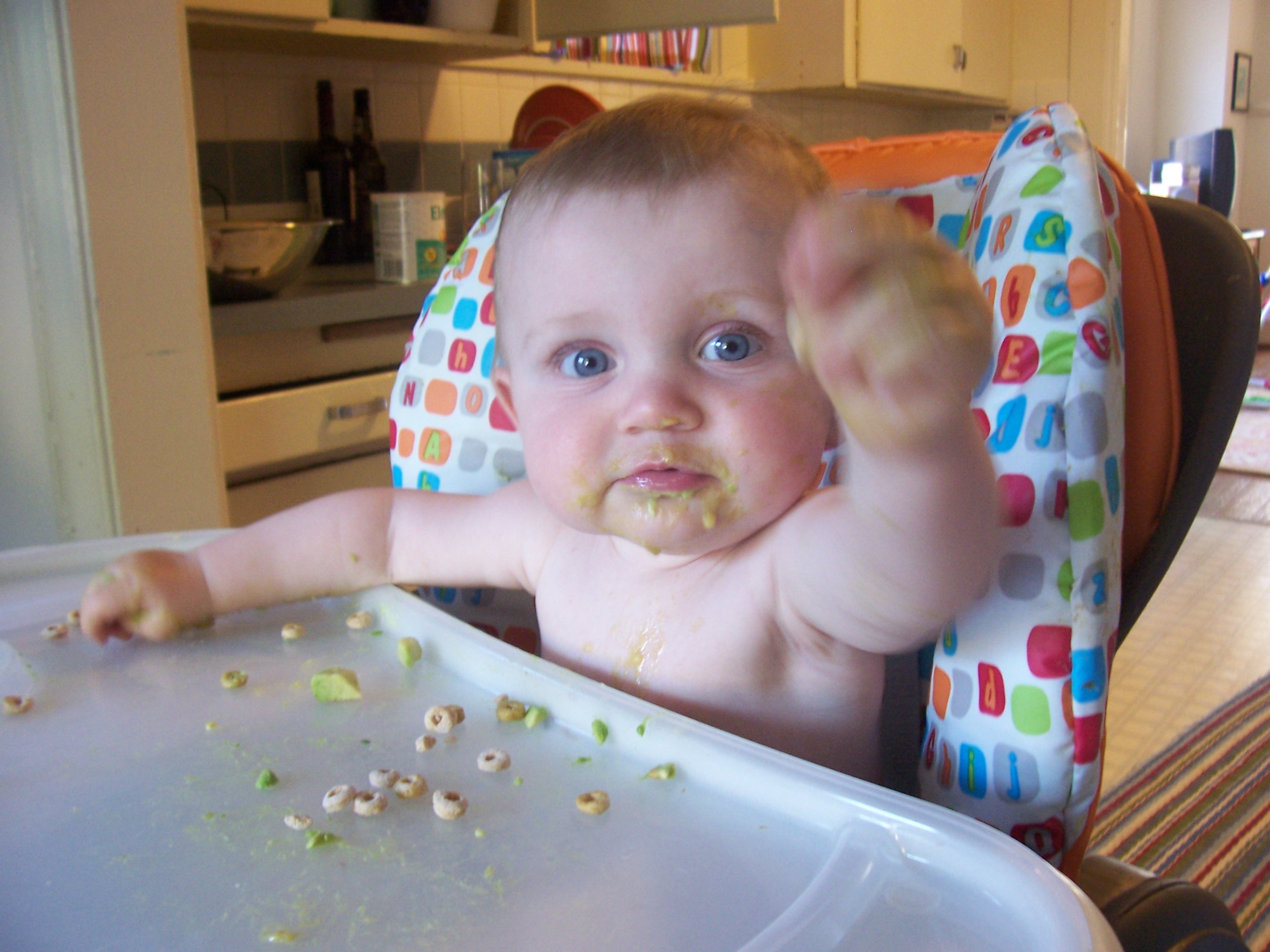
Super Stella can eat a pancake in a single bite (practically).

Super Stella can eat a pancake in a single bite (practically).

Sometimes I worry (shocking, I know) that Stella and I don’t venture out often enough for grand adventures. You know, to the Woodland Park Zoo or Pike Place Market. But then I turn on the vacuum or open the refrigerator door, and she goes absolutely bonkers with joy and excitement, and suddenly I’m certain in the knowledge that she gets her share of thrills right here at home.

The fridge is by far her favorite destination at the moment. She’s developed a particular fondness for a large bottle of light dijon dressing. If there happens to be some Cava chilling in there (which is often the case), she’ll  make a beeline right toward it, and I’ll smile and think to myself that we are incredibly alike.

Food and drink remain a big focus of our days. But a shift is underway–a very healthy shift in thinking and eating. Stella is eating plenty of food via bottle, spoon and finger. I think–I really, really think–that she has finally convinced us to chill the F out. Really. This is big, and it’s about time. I mean, on how many occasions has she rebounded from eating “less than usual” to eating “more than usual”? Tons. How many bottles has she drained? Countless. How many Cheerios and pieces of tofu has she stuffed in her mouth? So many that her grocery bill is starting to rival mine and that is really saying something, people.

I purchased a horribly edited but very helpful and well intentioned book called Super Baby Food by Ruth Yaron. The purple tome has helped me change Stella’s diet for the better (and by “better” I mean healthier and fresher). The book is frustrating on one hand, because it confusingly cross-references itself to the point of eye-crossing ,book-hurling annoyance, but it’s also empowering in that, by patiently plugging through key parts of the book, I’ve established a real plan for giving Stella a complete, incredibly nutritious, age-appropriate diet. Until recently, I really felt like I was just winging it. I had the feeling I could do better. Also, Stella has enjoyed three nasty colds in as many months, so I’d been wondering if there was a way to boost her immunity, even just a little bit, through her diet.

In a nutshell, the book encourages you to make baby food yourself, using lots of “super foods”–not just fresh fruits, vegetables, grains and legumes, but with those that are especially jam-packed with nutrients. At the heart of Super Baby Food is Super Porridge, which should constitute the baby’s biggest and most hearty meal of the day. You make it by throwing grains into a blender (I’ve been using brown rice and millet this week), then cooking them in water. You make a few servings at a time and put them in individual containers in the fridge. Come meal time, you take out a serving of Super Porridge and add stuff to it. In ice cube trays, I’ve frozen portions of pureed fresh vegatables and fruits of the “super” variety (including kale and papaya). So I pop one or two of these veggie/fruit cubes in the porridge and microwave briefly, and mix it up with a bit of flaxseed oil and brewer’s (nutritional) yeast. Every other day, I add an egg yolk to the porridge, per the book’s suggestion. On Sunday, I hardboiled four eggs and put them in a sealed container in the fridge. I eat the egg white as I mash the yolk before dumping it into Stella’s porridge. And the shocking thing is, she likes it. She really really likes this porridge stuff. Her favorite seems to be Super Porridge with a cube of mashed avocado, a cube of mashed papaya and an egg yolk (the flax and yeast are givens). I make an effort to prepare the porridge in a way that is appetizing. I’m not down with making her food that is nutritious but unappealing–what fun is that?

According to the book, yogurt has enormous health benefits (big revelation there, right?) and should be the base of one meal per day. I haven’t full-on incorporated this into our routine yet, because Stella is not supposed to have dairy until one year of age. However, I do stir some rice yogurt into her morning fruit meal, and I plan to grab some soy yogurt at the grocery store. I’ll probably do my bowels a favor (I owe them one after months of Pagliacci Pizza, RoRo’s BBQ and Mighty O donut dependence) and stock up on some Greek yogurt for myself.

Super Porridge may sound a little crazy and, well, it is–when you compare it to our old mode of using Earth’s Best jarred baby food and cereal (which I still use here and there as I am not going to become militant about what Stella eats and want her to enjoy a wide variety of foods). Super Baby Food isn’t exactly “simple.” But the level of effort wasn’t too excruciating this first week. I get the sense that in another week or two, I’ll be in the flow of it, making only small batches here and there. I expect this plan to become a habit that doesn’t require the current level of thinking and deciphering. Besides, I feel so good about feeding Stella this way. I love knowing that even on days when Stella doesn’t eat much, each bite she takes is off-the-charts nourishing. At times I still want to chuck the book out a window because it’s such a convoluted read, but I am really grateful for the hearty bits of wisdom nestled within pages full of rampant bolding and italics, near-criminal use of indentation, and random tangents and unneccessary side notes. All told, I love the book and how it’s enabled me to boost the quality of Stella’s daily meals.

I am finally taking better care of myself. As I plan her meals in advance,  I find that I am doing the same for me. I eat when she eats. We eat together, and though feeding her used to feel like a dreaded chore, it’s becoming more fun. I wore earrings and a skirt yesterday, and felt somewhat cute for the first time in ages. Nothing fancy, mind you. But I brushed on a bit of my beloved Jane Iredale SPF 20 Warm Silk mineral foundation, thought for more than five seconds about my outfit, and even accessorized. I don’t want to get ahead of myself, but I may shave my legs soon. (It’s blond and fine so not very visible. At least, that’s what I’ve been telling myself.)

Maybe it’s because we visited Stella’s OT last week for pointers. Maybe it’s the weather or my improved attitude rubbing off on Stella. Maybe it’s a growth spurt or her new homemade super food. Perhaps it’s all of the above. For whatever reason, Stella is chowing down. She seems to enjoy eating more than ever before. I’ve said this before many times. But maybe now, after all these months, we can stop the counting and obsessing and begin a new era of enjoyment. It would be as nourishing for Stella, and myself, as anything I can put in a bowl or bottle.

Bon appetit!

Return trip

It’s not an emergency. Nothing is really “wrong.” But we’re about to head back to our old stomping ground: Seattle Children’s Hospital. We’re going there to see Robin, Stella’s occupational therapist. Stella isn’t warming up to solids the way all the charts and books say she “should” by now, at the ripe old age of nine months, so we’re looking for some reassurance and perhaps a few tips on how and when to best offer food to Stella–without getting pushy. As we learned with the bottle, pushing only makes her want to eat less.

This morning, a vision from the past won’t leave my brain. I’m not sure why. It brings me back to our first appointment with Robin, before Stella got her tube and back when my entire day was consumed with the struggle to feed Stella. That morning, Robin filled me with hope. She watched Stella scream at the prospect of eating, she watched us spend a half an hour battling with Stella to get her to take three ounces. And then she said, “I’m going to see you through this,” and I suddenly felt a lot less helpless. But that’s not the moment that’s been on my mind.

I remember departing the room where we’d met with Robin, and walking down the hall toward the waiting room with Robin at our side.  Coming toward us at a brisk pace was Robin’s next appointment, a new mother accompanied by her own mother and arduously lugging her baby, left hand gripping the handle of the car seat. She walked with her entire body at an angle, as a counterbalance to the weight of the baby and her seat. She swung the seat forward a bit with each step, lurching along. The baby was peaceful but alert, with an NG tube taped to her right cheek. That terrified me at the time–I didn’t want Stella to wind up with a tube. But it was the mom who got me. There was such determination in her face and in her stride.  She was clearly focused on the task at hand, eager to learn more about how to help her baby. Eyes locked on her destination. Moving awkwardly, but forward. I’ll never forget that mom.

We’re off. I’ll let you know what happens.

Behold: Tube weaning research and guidelines

Invigorated by our walk

Back in her tube days.

When is the last time a research paper made you cry? Around the time of Stella’s wean, and since then, I’ve come across information that moved me on many levels. I’d like to pass along these sought-after papers to as many parents (of children and babies with feeding aversions and NG tubes or g-tubes) as possible.

Supremely helpful insights and guidance are offered in the article, “Prevention and treatment of tube dependency in infancy and early childhood.”

Details and analysis can be found in the research paper itself: “Standardized tube weaning in children with long-term feeding-tube dependency: Retrospective analysis of 221 patients.”

Update: Also, from Spectrum Pediatrics in Virginia, check out this pediatric feeding tube weaning case study! This case study breaks down exactly how a well-managed and supported wean takes place.

It is with great excitement that I share with this research on tube weaning. When Stella’s NG tube was placed, I immediately started researching the topic online and only found horror stories. I went into full-on panic mode immediately, because there was no helpful information. No hope. Only desperation and despair.
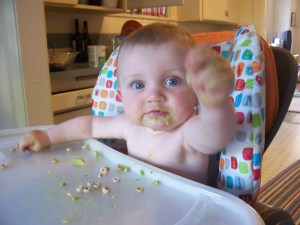
This is now.

Lean but healthy, and happily eating, just months later.

These resources seemed to illuminate our world, bringing light to what was previously a dark informational void. They completely validated my feelings and my husband’s feelings–our whole struggle, our crazy experiences, our obsession–surrounding Stella’s feeding aversion and tube placement. It’s fair to say that in this case, reading was healing. It’s so helpful to understand how calories are reduced and what a respectful, child-centered wean looks like.

Why are these papers such a big deal? Because so little research on tube weaning exists, and therefore most parents and doctors are really just “winging it.” Yes, some children require tubes for long-term survival and the authors of these papers fully acknowledge this, of course. But many children who are capable of eating on their own, whose core feeding or other issues have been addressed but who remain *unwilling* to eat, are tube-fed for years, which needlessly and often dramatically lowers quality of life and impairs development. There’s a better way, and we need to spread the word.

Children and their parents are sent home from the hospital with feeding tubes in place, but without anything resembling a clear time-frame or plan for tube-feeding, and certainly no plan or support for weaning. Children and families deserve better than that.

I find these two excerpts from the tube weaning article and research to be particularly powerful:

“Tube dependency is a distressing and unintended result of tube feeding in infancy. The condition of tube dependency can be defined as active refusal to eat and drink, lack of will to learn or the inability and lack of motivation to show any kind of precursors of eating development and eating and drinking skills after a period of gastric feeding. It is characterized by overt disinterest, food avoidance and active refusal, gagging, vomiting, oversensitivity, fussiness and other oppositional and aversive behavior. It may influence the quality of life of the affected infants and their families to such a degree that all other troubles fade into insignificance besides the nightmare of a child who will not eat or drink. Nevertheless, tube dependency is not recognized as a problem by many pediatricians.”

“Parents of tube-fed children feel unhappy about their plight. If the duration of tube feeding exceeds the predicted period of time, they will wish to start tube weaning but lack the means to do so. A vicious circle of insecurity and desperation may result. Pressure and adult expectation build up, causing the child to resist any steps towards autonomy. Parents report feelings of anger, guilt and sadness at the sight of other children eating normally. In earlier studies (Lit 42,43) we reported that 86% of parents of tube-fed children suffered from overt depressive symptoms that disappeared after their children had begun to eat normally.”

The following excerpts should give you a quick, high-level view of the study (its purpose and outcome) as covered in the papers:

“Results: 203/221 patients (92%) were completely and sufficiently fed orally after treatment. Tube feeding was discontinued completely within a mean of 8 days, the mean time of treatment was 21.6 days.”

“The rationale for this retrospective study is to specify a successful tube weaning program in infancy. Many children remain tube dependent after successful healing of their underlying disease. Tube dependency often is accepted as ‘unintended side-effect’ of the treatment.”

“The main hypothesis of the study is: specialized treatment is highly effective and allows weaning severely impaired children even when numerous previous attempts had failed. The primary objective was complete weaning from long-term tube feeding based on sufficient, self-regulated oral intake.”

“The most important point of the model is the concept of full oral autonomy of the infant from birth and the implementation of this concept into the daily handling of parents and caregivers dealing with eating disorders, feeding disorders and tube-fed infants. Hunger is the main motivation for the attainment of self-regulated eating behavior.”

“[Tube] Placement must be preceded by clear criteria and a decision as to the indicated nutritional goal and time of use. The placement of a temporary tube must generate a plan covering maintenance issues including time, method and team for weaning. Aspects of tube feeding that go beyond purely medical and nutritional issues need to be considered in order to minimize the frequency and severity of unintended tube dependency in early childhood.”

In Spectrum Pediatrics’ detailed case study, you’ll see many references to honoring and respecting the child and being attentive to the child’s cues. The goal is to allow hunger while minimizing stress, and to create a situation wherein the child chooses to become an eater by mouth:

“The team members utilized intuition and developmental knowledge in order to read the “cues” of the patient to know what the child wanted to eat, as well as with whom and where. All of the eating scenarios were very relaxed and focused on fun and play. The tube weaning program team members were cognizant of ensuring an eating environment that was comfortable and low-anxiety. If the child was ever afraid to eat, the therapists and parents would return to enjoyable play activities. He was able to cope with his post-traumatic feeding disorder and its negative effects through play in the low-stress, enjoyable environment.”

“The patient continued to exhibit changes in his hunger and sleep cycle on the third and fourth day of the tube weaning program. He had difficulties with sleeping based on his new sensations with hunger and self-regulation. The team continued to make the eating situation as comfortable as possible for the patient by “following his lead”. This led to feedings of his most desired foods and in a variety of locations, including outdoors, indoors, on the floor, in the bathtub and in the car. The team also continued to provide water-dense foods, such as melon and cantaloupe, in order to ensure that he was keeping well hydrated. It was evident that he was growing in his familiarity with new sensations, foods, and oral motor skills.”

I hope these resources are as helpful to you as they were to me! Best weaning wishes.
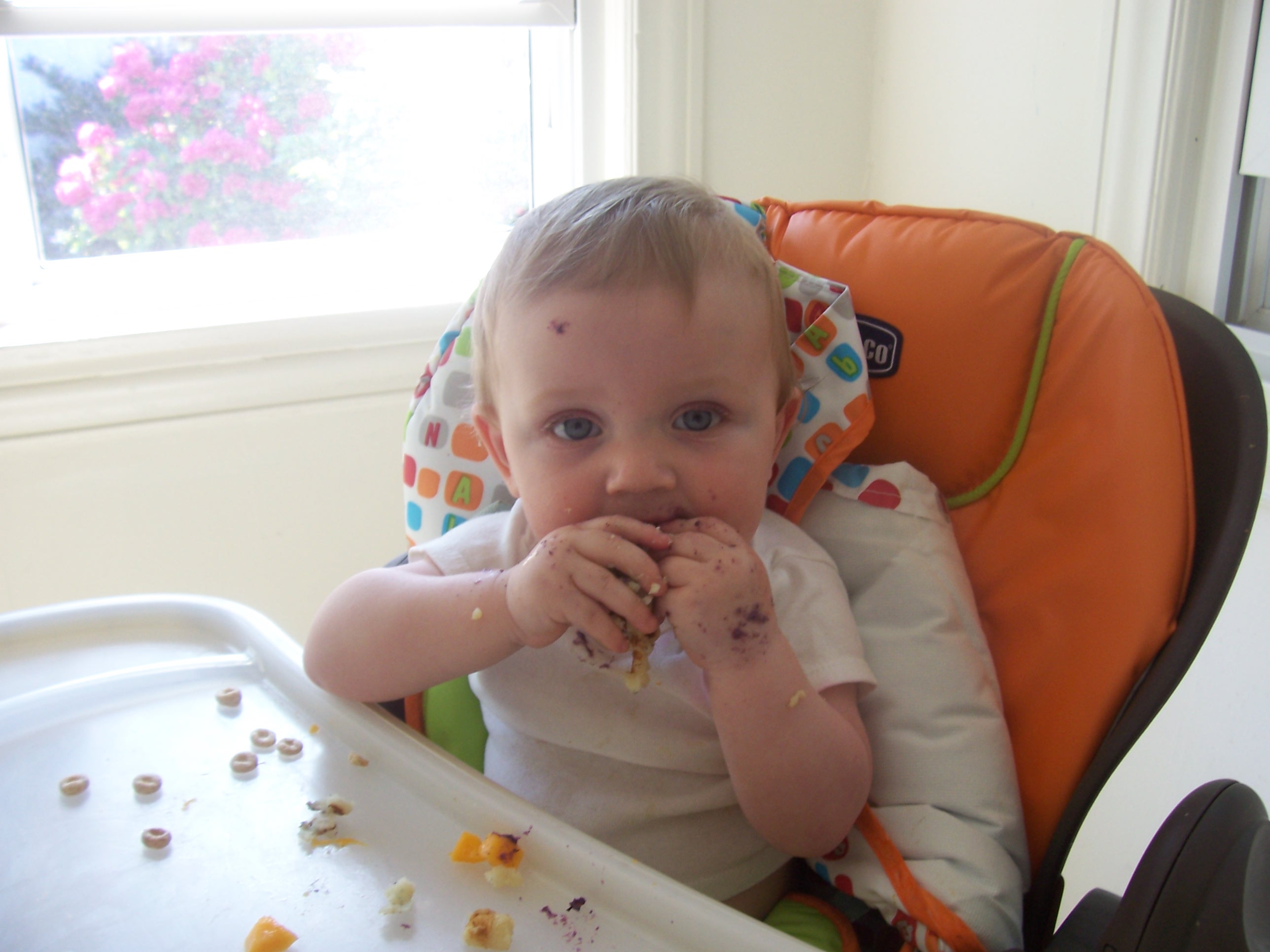
Nine months

Stella's a little shy in the pool--at first.

Stella's a little shy in the pool--at first.

So, Stella has been outside the womb for just about as long as she was in it. This seems like a big milestone to me and my uterus.

Stells (that’s not a typo–it’s one of our nicknames for her) celebrated her nine-month birthday on Sunday. The occasion was marked with a Waterbabies class (with a stop at Bellevue’s Downtown Park beforehand), and a walk to Gasworks Park. The next day, we went in to Dr. N’s office for her nine-month check-up. Ah, yes. Time for those dreaded percentiles.

Cody and I let out a sigh of relief and our shoulders dropped about six inches upon seeing the number on the scale: 19 pounds, 2 ounces. We knew that if she wound up at 19 pounds or so, she’d be at or above the 50th percentile for weight. I know, I know. It doesn’t even matter. One look at Stella tells you how happy and healthy she is. But we’ve got a nasty, lingering case of feeding aversion/tube-induced PTSD  and are grateful for any extra reassurance.

After the measurements were taken, the doctor came in, shook our hands and started tapping away on his touchscreen. He’d plugged in Stella’s stats in order to show us her growth curves, charted electronically.

“Look at this beautiful curve, ” he said, highlighting the fact that Stella’s weight was right between the 50th and 75th percentiles, just as it had been at her six-month check-up. He continued, with a bit of sing-songy positivity in his voice (which I loved), “And this curve looks great…” We saw that, for length/height, she was in the 75th percentile, just like last time. We were flying high.

Then, pointing to a dot, adrift above the highest percentile curve, he noted, “And this is how smart your baby is.” He was kidding, of course, but her head size was clearly “off the charts,” as they say. Last time, it’d been on the highest curve. Her head circumference has risen by a few percentiles between each check-up apparently. It’s not uncommon, really, and not a concern. Unless it keeps going, of course. In which case learning to walk will be a lot more challenging.

In short, Stella is thriving. Her doctor told us to feed her solids three times a day (I’d limited it to two, fearing that she might not take enough from the bottle otherwise), and to stop tracking how much formula she takes outside of that. He also suggested changing her formula to the normal 20-calorie-per-ounce concentration, which we have done. At one point, in the wake of all this, I stuttered, worriedly, with what I’m sure was a look of concern and confusion, “Um, so, like, h-how much f-formula does she NEED now?” The doctor kindly told us that we’d worried enough, and that we could stop now. Worry had become like air to us. So we are pretty much adapting to life on a new planet.

He also pointed out that, in a way, we are allowing Stella to wean herself off of the Ranitidine by not upping the dose as she grows. It reminded me of the progress she’s made int hese last three months. She’d been on two reflux medications until a couple months ago. We’ve lowered the amount of Simply Thick we put in her bottles, with the goal of soon weaning her off of that, too. She is back to the “normal” caloric density for formula–just like I’d predicted (boldy, it felt at the time) in her early tube-free days.

And that brings me to my point. So often, these days, when I look at Stella’s impossibly beautiful, beaming face, I can’t help but cry. Especially when she laughs. I remember, somewhere in the dark, dark days of December, bawling at most commercials. Our situation and those post-partum hormones were brutal–even bland Sleep Country USA ads opened deep, previously forgotten psychic wounds, apparently. But there was something especially gripping about the “Peace on Earth” spot for Pampers. Those soft, gorgeous baby faces! Those cherubic, chubby cheeks! Yes, those cheeks. Those cheeks, free from evidence of medical intervention. Those perfect baby lips, moving as if the baby is nursing in her dreams. They tormented me. Because to Stella, eating was a nightmare, not a dream, and our view of her angel face was obscured by two kinds of tape and a long yellow tube. Those babies were chubby and sleeping in a sprawled out fashion–not being force-fed while sleeping swaddled and strapped into a giant foam wedge. That commercial just seemed cruel to me at the time.

I go into her room and look at Stella every night before I go to sleep–despite that fact that by doing so I risk letting our super creaky floor wake her up. I have to do it. How could I miss out on the most beautiful sight imaginable? It is a triumph, a joy and a reminder to be grateful. I just watched the Pampers commercial again. And I have to say, Stella would fit right in with that bunch of sleeping angels–those arrogant bastards.

Wrong again. Then right.

There have been so many times during our seven months with Stella when we thought we had everything figured out, only to discover that we were completely wrong.

Back when she was refusing to eat and not gaining much weight, before her two months with the tube, we were, at one point, convinced that the issue was her poor latch. Then it was my low milk supply. We were way off, and it would take us a while to realize that Stella’s latch was indeed okay–she just didn’t want to take in milk and acted accordingly, which led to my low milk supply and not the other way around. Then we were certain that THRUSH explained why she didn’t want to eat. Nope–the doctor took one look and shot that down. Then it was lactose intolerance that was the cause of all our trials and tribulations. Wrong again! Her lab tests pointed in another direction (cow’s milk protein intolerance–whatever that means).

One night last week, Stella woke up AT LEAST a dozen times and screamed her head off upon opening her eyes. She shook her head from side to side. She was furious and clearly in pain.  Holding her, bringing her to our bed–all the usual no-fail tactics–did little to nothing to soothe her. She was incredibly fussy with the bottle (our nightmare revisited). But we thought she’d just fought off a bug of some kind, so after some quick online research, the answer seemed obvious: Stella had an ear infection.

Nope.

The next day, a pediatrician told us with 100% certainty, after peering into Stella’s adorable ears, that there was nothing resembling an ear infection. She also felt around Stella’s tummy, applying pressure in an attempt to find intestinal discomfort. There was none. There was no source of pain that could be identified, except for her second tooth coming in, just to the left of the one, in the front on the bottom, that came in a couple weeks ago. The last time a tooth erupted, sure, there was fussiness around eating but not endless bouts of screaming and almost completely sleepless nights. We were baffled. Again.

And to make matters worse, at her appointment, she weighed in a full two ounces less than the previous day’s doctor’s visit (she’d been acting like a rag doll and was clearly sick, then we thought she fought it off, then she stayed up all night screaming, then we thought she was okay for a day, then she developed a horrendous cough). Which put her one month weight gain at a mere 4 ounces and just about sent me off the edge. With the doctor’s help, we came up with a game plan to get her some additional calories. I’ll be mixing in rice cereal with all her spoon fed meals–though I don’t think she’ll ever take as much rice cereal as they want her to because she simply doesn’t like it. We have all but removed the fruit in her bottles, as it may have a laxative effect (especially the prunes) and take up the space of the more nutritionally important formula. (Though in hindsight, that plan seems futile–a sweet sort of futility made up of good parental intentions. Stella will eat what she wants to eat, when she wants to eat. And there is so incredibly little I can do about it.)

Just when we thought everything was going so well.

But then, earlier this week, she ate 30% more than she is “supposed to.” And now, she’s back to not wanting to eat, because she appears to be teething (she chews on the nipple, doesn’t want to suck, yadda yadda.) I guess that’s just the way babies are. Last week, Cody was feeding Stella, and despite how much I love her (so much that it makes me crazy sometimes), I just wanted to leave. I didn’t want to hear the crying. I didn’t want to worry myself sick. I didn”t want to wrestle with the mystery of  “what is wrong now.” I just wanted her to be okay. To be healthy and happy. How can such a simple wish be so heavy?

Well, today I’m in a different place. Cody just fed her. She took about 100, far below her usual. But I don’t feel the need to avoid the situation. I am not as worried. Something has changed. Maybe because for the few days preceding this teething strike, she ate like a champ. She ate like you read about. She ate like eating was hip and she was a hipster. She ate like it was the only thing worth doing. So, if for a few days she doesn’t eat as much, how can I really worry? She is doing what she needs to do. I trust her. She is not the baby that used to scream her head off when she saw the bottle. Nowadays, if she doesn’t want to eat, she chews on the bottle. The bottle is her buddy, not her enemy. Her new tooth isn’t a buddy at the moment, but that’s okay. She is a baby, doing normal baby things. I am a new-ish mom. Experiencing normal new mom things. We are “normal.” (As normal as there is, anyway.) There is no tube. There is no feeding aversion. We are so blessed. And to worry this time in our lives away would be criminal.

Seriously. She is so cute I can’t stand it. I am so mindblowingly lucky. And gratitude now outweighs worry. By far. What a difference a few months make.

With that, I’m dragging Cody and Stella to Molly Moon’s. After all the emotional progress I’ve made, a sundae is in order. Make it snappy. And don’t you dare skimp on the whipped cream.

Wheel! Of! Feeding!

It occurred to me today that feeding Stella is like being on The Wheel of Fortune, a show that I’ve always loathed. As she’s eating, I’m basically thinking, “Big Money! Big Money!” When she’s done with the bottle, I look to see how much she’s eaten–200 mls or more is the equivalent of landing on $5,000 and 100 or below feels like the “Bankrupt.” Doesn’t help that she’s sick, which has crushed her appetite. And that we found out, during a recent doctor’s visit, that she’d gained very little weight in the past month. It’s enough to make my head spin. And hurt.

I keep telling myself, accurately, that babies gain weight in spurts, and she’ll surely have one when she’s feeling better.

In the meantime, I’d like to buy a vowel. And some Ibuprofen.

Lucky seven. (Months, that is.)

Stella's got what they call "stage presence."

Stella's got what they call "stage presence."

On St. Patrick’s Day, Stella turned seven months old. I’m pretty sure that means she can get a driver’s permit. And maybe even a part-time job. At the very least, she can sit up for long periods of time before the weight of her large head pulls her over. She can tickle the ivories like you wouldn’t believe. And when sitting in her crib, she can pull herself up to a kneeling position–the gateway to standing.

That evening, as my amazing corned beef simmered in a broth of beer and spices, Stella’s piano showed up on our doorstep. The house smelled like Ireland, and dreams, which was somehow extremely appropriate. We opened the box–an event that was very, very exciting judging by Stella’s even-wider-eyed-than-usual expression as I sliced the tape with my trusty blade–and out the baby piano came in all its shiny red glory. I placed it on the rug, plopped Stella in front of it, and she banged those keys as hard as she could while smiling as wide as she could. Then she promptly forgot all about it and tried to eat the accompanying manual and play-by-color sheet music. Paper is Stella’s #1 passion for now. But music is a close second. After I tucked away the paper goods, she resumed her performance with incredible enthusiasm, intermittently grabbing the top and, impressively, pulling the entire piano toward her. You could see the wheels turning in her head; “Maybe if I try hard enough, I can get the top of this delicious piano into my mouth… mmmmm, piano…..”

Stella’s Little Mozart Piano is really like a musical friend than a toy. Right now, she simply sits on the floor in front of it, and it’s the perfect height. But the piano can be raised up by attaching the base that comes with it, allowing the child to stand or sit on the accompanying shiny red bench and play, making it “the piano that grows with your child.” I think it’s brilliant. Stella absolutely loves it. We really should be saving money rather than spending it, but this was worth the splurge. A long-term investment in FUN.

Yesterday, Stella was not herself. She was cranky and tired in the morning, and grew steadily more so as the hours passed. I realized that she had spent more time sleeping than awake, she was a rag doll, crying unless I held her. And instead of squirming and pushing away from me to look at her surroundings, she curled up into me, resting her head on my chest. Stella was sick for the first time. She had a slight fever and threw up a couple times that evening. But today, she is back to her old self. She dropped that bug like a bad habit! Cody took her to the doctor this morning, and her fever was gone. She checked out fine. And really, seven months was an excellent run!

HOWEVER. Her doctor’s visit entailed a standard weigh-in. Sigh. If she hadn’t fallen ill, I wouldn’t know that she’s only gained about 6 ounces in a whole month. Now I’m anxious and confused. I’m trying to cope, but my attempting to remain calm in the face of this worry is like an alcoholic trying to stay sober in a bar. About a week ago, we switched Stella’s formula from a 24-calorie-per-ounce concentration to the standard 20-calorie-per-ounce ratio. Granted, this means that for most of the month, she was on high-caloric formula, so perhaps we can’t blame the new lower concentration. Since the switch, I’ve been keeping track of her intake and it’s been high–between 30 and 32 ounces per day. Right on track! And this is in addition the face that Stella is mastering the art of spoon feeding. At first, far more food wound up on the floor, high chair tray and her bib and clothing than in her mouth. WAY MORE. But now, she’s swallowing way more food than ends up on her and various kitchen surfaces. On Tuesday, she even finished a whole container of peas in one sitting. Just another reason I’ve been saying “Bravo!” to Stella.

Top o' the mornin' to ya.

Top o' the mornin' to ya.

So, in regards to her minimal weight gain, I am completely baffled. I emailed her occupational therapist to get her thoughts, and perhaps some reassurance. Stella’s doctor didn’t express any concern over her weight, so my worry is “proactive” as usual. I’ll probably schedule an eight-month weight check in order to ease my mind. In the meantime, I’m trying to focus on Stella’s behavior and demeanor instead of her weight. Certainly not the fact that she still fits in some 3-month size clothing. She seems happy and healthy–with the exception of that 24-hour bug–and that’s what counts.

When we’re not playing the piano, eating, napping, or out for a walk, we’re trading fake coughs. I’ll fake a cough. And she’ll fake one back. And then we laugh. It’s good fun, though probably setting her up for hypochondria. Or an acting career.

Meet Diego

Back in mid-November, when Stella’s NG tube was put into her cute nose and down into her then-hungry and confused tummy, I was understandably freaked out. I wondered if it was the right thing to do. I worried about how it would affect her. So I did the worst possible thing I could do. I turned to the internet for answers. What I found, mainly on message boards and on random, unofficial-looking “medical” websites, was horror story upon horror story about how NG tubes make feeding aversions worse. How they lead to complete oral aversions, make reflux worse and pave the way to surgically inserted g-tubes. I was so scared.

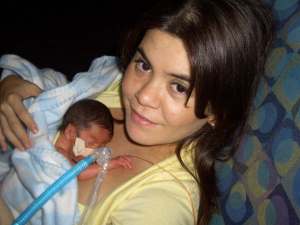
Rocio and Diego, bonding not long after his premature birth.

Rocio and her precious and miraculous Diego, bonding not long after his premature birth.

I did have the good sense to realize that the people most likely to turn to the web are those who, like myself at the time, are struggling. If things are going well with your child, or if you’ve overcome an issue and are no longer in it, you’re less motivated to go to the web and tell your story. You don’t need answers and support. You’re not desperate for any tidbit of information you can get. I knew that out in the real world, there were probably lots of babies who’d been on NG tubes for a short time and then resumed normal eating. Through my occupational therapist, I learned about the amazing Libby. And then, one night, through comments she left here on this blog, I met an incredible mother named Rocio and her son Diego.

That evening, Rocio did what I had done. She felt a rising sense of panic after reading terrible anecdotes about NG tubes online. She then came across Stella’s story and was encouraged to see that Stella was making progress with eating. Rocio and I began to communicate regularly via email. In a sense, it felt like we were in this together. This woman I had never met who understood everything I was going through and vice versa. We were going to get our babies off the tube. And no other outcome was acceptable. As scared as we were, we knew they could do it.

Rocio’s son Diego was born prematurely, at 28 5/7 weeks gestation. He was tube-fed from birth, first through his mouth, then, after graduating to “level 2” in the NICU, through his nose via a nasogastric (NG) tube, just like the one Stella had. As Rocio explained, Diego developed reflux while learning how to eat, which set him back. As in Stella’s case, the pain all but eliminated his desire to eat. After spending three months in the hospital, Rocio pushed to have Diego sent home, so that he could enjoy a more comfortable, cozy, non-medicalized environment. So, Rocio and her husband bravely learned how to maintain the NG tube, and headed home with their son, unsure about what the future held.

Like Stella, Diego had a Merry first Christmas--even with the NG tube.

Like Stella, Diego had a Merry first Christmas--even with the NG tube.

Rocio was on the same nauseating rollercoaster we had ridden. So many ups and downs. Exhilarating upswings of hope followed by crushing disappointments. Early on in our communications, at the very end of December, she told me, Diego was “not passing the 25 to 30 cc mark of drinking his bottle per feeding.” (There are about 30 cc’s or mls per ounce.) It was a tough time. But once in a while, he finished entire bottles–it took over an hour, but he was FINISHING them. And more progress quickly followed. One day, she told me that Diego took 90 mls in 45 minutes. He was showing that he could do it.

On February 4th, I received an unforgettable, elated email from Rocio. She told me that Diego had been without a tube for three weeks, and that he was thriving. In fact, he was gaining approximately one ounce  per day! Based on all the research I’ve done and my learning from the director of the Austrian tube weaning clinic, I know that this is amazing weight gain, especially so soon after the tube’s removal. Rocio was thrilled, and I truly felt her joy.

A GI doctor confirmed that Diego’s tube was gone for good. At this point, Stella had been without a tube for exactly one month, and it was also clear that her tube was gone for good. We’d done it.

Like Stella, Diego still had some difficulty swallowing. For us, thickening Stella’s formula did the trick. Last I heard from Rocio, Diego was going to have “ECI (Early Childhood Intervention) therapy because the swallowing study projected that he still needs to learn how to swallow better.”

I asked Rocio what she believed was the key to Diego’s success. Her answer was simple. First, Diego needed time to mature. Having been born so early, he didn’t have enough practice. (Babies learn to swallow in the womb.) Then, Rocio needed to get over her fear. Naturally, she worried that he would get sick or be undernourished upon the tube’s removal–even if a deeper part of her knew he no longer needed it. Lastly, she pointed to the removal of the tube as the most important aspect of his feeding progress. Rocio explained, “Pray and have faith. Babies will eat without [the tube] once they feel the need and understand that if they do not want to eat the regular way, they will have no other way to do so.”

With his tube days behind him, Diego is radiant and thriving!

With his tube days behind him, Diego is radiant and thriving!

Rocio fought for Diego. She faced incredibly challenging circumstances with Diego’s premature birth and extended hospital stay. She had to push just to take him home. Then she found the support and therapy he needed. Then she made the big decision to follow her instincts and take out the tube. This is a beautiful, healthy boy who has overcome some daunting odds. And he’s very lucky to have Rocio as his mother.

Whenever I think about Stella’s challenges with eating, that very trying time in our lives and how we overcame it all, I’ll think of Rocio and Diego, too.

A taste of spring, a touch of sleep deprivation

She gets more email than me. Probably has more Facebook friends, too.

She gets more email than me. Probably has more Facebook friends, too.

Spring sprang for a few hours today. And it was lovely. Stella and I went for a sun-drenched walk, and later, we sat outside on the quilt Mimi made. (If only Stella would put down her Blackberry and live in the moment once in a while!) This evening, it rained cats, dogs, and ponies. It was like two days’ worth of weather crammed into one. I was confused. Stella loved it all. She enjoys rainy walks in the carrier and even helps me hold the umbrella.

Have I mentioned how much Stella loves going for strolls in the Baby Bjorn? We head out two or three times per day, rain or shine. I am beginning to wonder if our wandering, and general lack of structure, is getting the way of a proper “sleep schedule.” You see, I basically follow Stella’s lead. When she seems hungry, I feed her. When she seems tired, I put her down for a nap, or to bed for the night. In recent weeks, she developed a lovely habit of falling asleep upon finishing a bottle. HOWEVER. Lately, it isn’t so easy. Stella is fighting sleep, especially during the day. And I’m not sure what to do about it.

There are lots of theories on why this happens and what to do about it. I have an annoying book called Healthy Sleep Habits, Happy Child. I hadn’t looked at it in months but perused the section about five- to 12-month-old babies today, immediately prompting near record levels of neurosis. Apparently, Stella should be awake by 7am. Then have a nap at 9am and 1pm, and perhaps, another late afternoon nap if she seems tired. Well, today, Stella woke up around 9am, napped for almost two hours (unusual and fantastic) at noon, then napped for five minutes at around 4:30pm. And that was that until she went to bed at 9:30pm, after her last bottle of the day. Every day is a little different, but most often she doesn’t nap for more than 30 to 45 minutes at a time tops. As a result of this, my annoying book tells me, my brilliant, usually cheerful Stella is on the path to A.D.D. and behavioral problems. (I told you this book was obnoxious–not to mention HORRENDOUSLY EDITED. I will admit, however, it did help us a bit early on. Especially the bit about how sleep begets sleep, and that in their very first weeks and months, babies can really only be happily awake for one to two hours at at time.) In recent days, a troubling trend of screaming and crying–even though she is obviously tired and in need of a nap and rubbing her eyes like crazy–is emerging. The book says that by comforting her, I am being a terrible, terrible parent. What to do?

Spring looks good on Stella.

Spring looks good on Stella.

Before I decide what, if anything, I need to do about Stella’s sleep schedule or lack thereof, I am going to see what happens over the next day or two. We just enjoyed a visit from Mimi and Grampa (my parents), and perhaps all the excitement got us out of our normal rhythm. Or maybe she’s teething. Or, I’ve heard that the development of new skills disrupts sleep, so perhaps her recent advancements in the areas of rolling and sitting up have thrown her out of whack. Or the normal phase of seperation anxiety is to blame. Or maybe there’s a pea under her mattress.

THE THING IS. After all the craziness with the feeding aversion and the tube, I think I get especially worked up when she gets worked up. When she cries, there is a part of me that is truly terrified that something is seriously, seriously wrong and if I don’t jump on it, it will explode in our faces. Because way back when her feeding issue was just starting, there were signs. They haunt me.

Crocus Pocus. Spring is starting to work its magic. Hopefully it will extend its powers to Stella's napping.

Crocus Pocus. Spring is starting to work its magic. Hopefully its powers extend to napping.

But there is another part of me–a sane part buried deep within, a beaten down part that often gets drowned out by panic–that knows that babies cry. And that babies often prefer play over sleep. Hek, so do I. Even when I’m exhausted, and when earlier that day I berated my bedraggled self for going to bed late, I’ll stay up and watch LOST. Or write a blog post. Or check Facebook for the billionth time. It’s the same thing. Only instead of Facebook, she has a network called “mom and dad.” And instead of LOST, she has the suspenseful thriller entitled “mom and dad.” And instead of a blog, she has Goodnight Moon (read to her by mom and dad).

So, I’m trying not to worry too much. And just  follow my instincts.

Sunshine helps a bit.

And with that, I’m 41 minutes late to bed myself. A.D.D., here I come!