The truth about moms

On message boards across the web you can find, far too easily, cringe-inducing posts by moms skewering each other’s parenting styles and choices–battles over breastfeeding versus formula-feeding and catfights about co-sleeping and cribs, and that’s just the tip of the judgemental iceberg. This sad reality is partly why, even though it was necessary to ensure Stella’s wellbeing, the switch to hypoallergenic formula was so difficult.

I’ve thought a lot about all the guilt and shaming and I think that what it really boils down to is that today, there is no one clear way to raise a child. Somehow, with a constant flood of opinions, experts, and information, there are more questions than answers. Nothing is clear cut. We’re all so worried about making the “right choices” for our children that we cling tightly to our way of doing things, and they come to define us. It’s as if we are trying to convince ourselves, not just others, of their correctness. Defensiveness and insecurity can be the only explanation.

However. What I’ve learned through my experiences with this blog is that none of that matters. Not one bit. I’ve heard from mothers across the country and around the world–moms in Singapore, New Zealand, Ireland and Texas whose babies refuse to eat. We all do the same desperate things, ask the same questions, and think the same thoughts. Our feelings, stories and longings are not just similar, but identical. The fact that some of our babies enjoy breastmilk and some formula, and that some sleep nestled under our arms while others are tucked into lovingly adorned cribs, makes no difference whatsoever. These women span a diverse range of nationalities, but you’d never know it.

As I think about Hatice, Rocio, Erin and all of other moms who’ve contacted me, I am overcome with emotion. Not just because I’ve been where they are and know how gut-wrenching their struggles are. Not just because I know how terrifying it is to insert an NG tube, how the tape turns their scrumptious little cheek into a red, raw mess that seems to symbolize disfunction, and how an aversion comes to suffocate every other aspect of life. No. Really, my heart aches and expands when I think about them because they love their babies so very, very much–literally to the point of madness, sometimes. They would do anything at all, gladly handing over their own wellbeing and comfort, to ensure that their babies are happy and healthy. It’s that simple.

The truth about moms is that we are all incredibly alike, when it comes to what actually matters.

Me and Stella, all cozy and matchy matchy.

Me and Stella, all cozy and matchy matchy.

Behold: Tube weaning research and guidelines

Invigorated by our walk

Back in her tube days.

When is the last time a research paper made you cry? Around the time of Stella’s wean, and since then, I’ve come across information that moved me on many levels. I’d like to pass along these sought-after papers to as many parents (of children and babies with feeding aversions and NG tubes or g-tubes) as possible.

Supremely helpful insights and guidance are offered in the article, “Prevention and treatment of tube dependency in infancy and early childhood.”

Details and analysis can be found in the research paper itself: “Standardized tube weaning in children with long-term feeding-tube dependency: Retrospective analysis of 221 patients.”

Update: Also, from Spectrum Pediatrics in Virginia, check out this pediatric feeding tube weaning case study! This case study breaks down exactly how a well-managed and supported wean takes place.

It is with great excitement that I share with this research on tube weaning. When Stella’s NG tube was placed, I immediately started researching the topic online and only found horror stories. I went into full-on panic mode immediately, because there was no helpful information. No hope. Only desperation and despair.
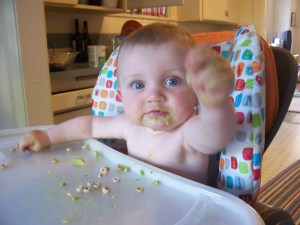
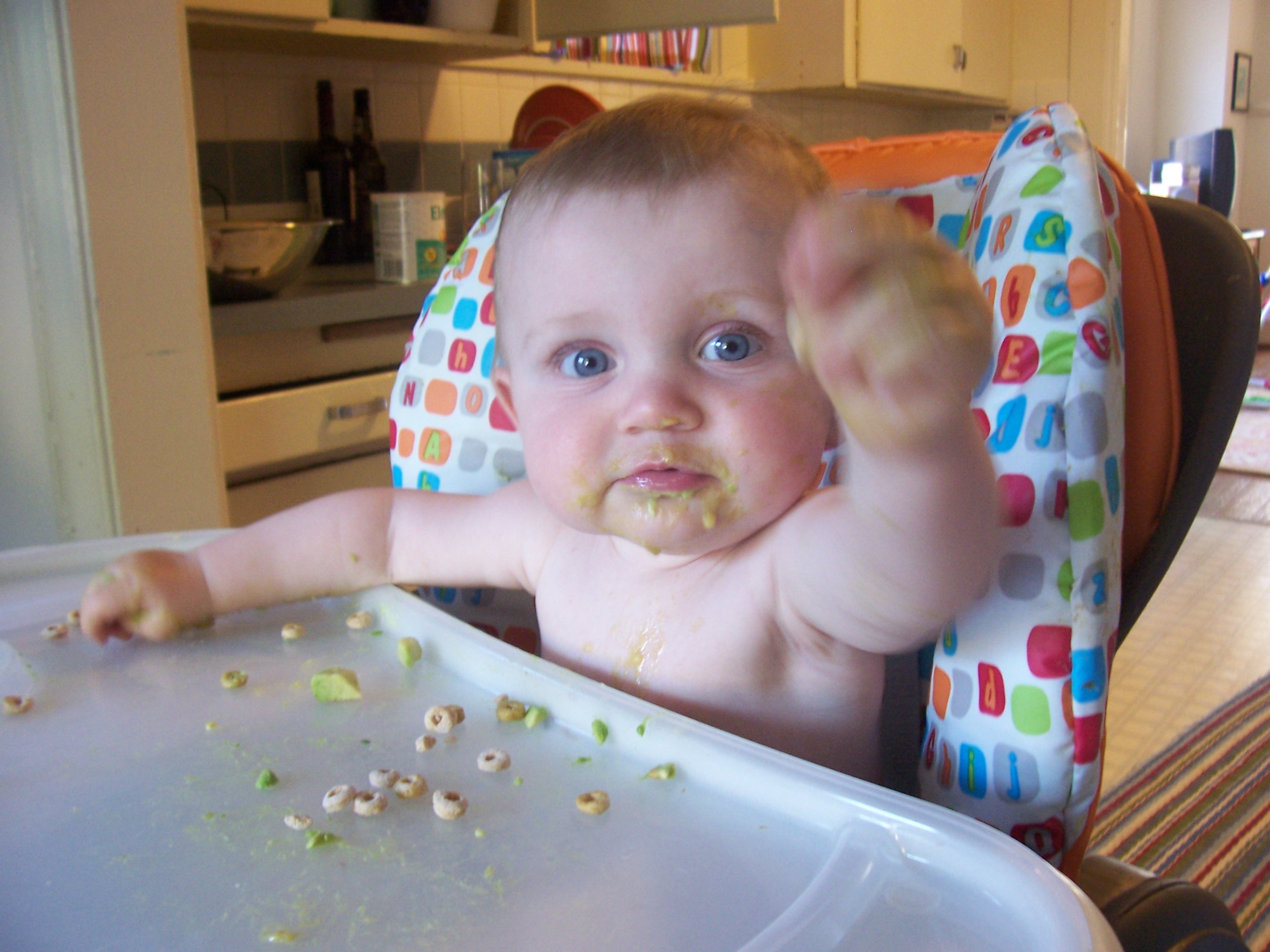
This is now.

Lean but healthy, and happily eating, just months later.

These resources seemed to illuminate our world, bringing light to what was previously a dark informational void. They completely validated my feelings and my husband’s feelings–our whole struggle, our crazy experiences, our obsession–surrounding Stella’s feeding aversion and tube placement. It’s fair to say that in this case, reading was healing. It’s so helpful to understand how calories are reduced and what a respectful, child-centered wean looks like.

Why are these papers such a big deal? Because so little research on tube weaning exists, and therefore most parents and doctors are really just “winging it.” Yes, some children require tubes for long-term survival and the authors of these papers fully acknowledge this, of course. But many children who are capable of eating on their own, whose core feeding or other issues have been addressed but who remain *unwilling* to eat, are tube-fed for years, which needlessly and often dramatically lowers quality of life and impairs development. There’s a better way, and we need to spread the word.

Children and their parents are sent home from the hospital with feeding tubes in place, but without anything resembling a clear time-frame or plan for tube-feeding, and certainly no plan or support for weaning. Children and families deserve better than that.

I find these two excerpts from the tube weaning article and research to be particularly powerful:

“Tube dependency is a distressing and unintended result of tube feeding in infancy. The condition of tube dependency can be defined as active refusal to eat and drink, lack of will to learn or the inability and lack of motivation to show any kind of precursors of eating development and eating and drinking skills after a period of gastric feeding. It is characterized by overt disinterest, food avoidance and active refusal, gagging, vomiting, oversensitivity, fussiness and other oppositional and aversive behavior. It may influence the quality of life of the affected infants and their families to such a degree that all other troubles fade into insignificance besides the nightmare of a child who will not eat or drink. Nevertheless, tube dependency is not recognized as a problem by many pediatricians.”

“Parents of tube-fed children feel unhappy about their plight. If the duration of tube feeding exceeds the predicted period of time, they will wish to start tube weaning but lack the means to do so. A vicious circle of insecurity and desperation may result. Pressure and adult expectation build up, causing the child to resist any steps towards autonomy. Parents report feelings of anger, guilt and sadness at the sight of other children eating normally. In earlier studies (Lit 42,43) we reported that 86% of parents of tube-fed children suffered from overt depressive symptoms that disappeared after their children had begun to eat normally.”

The following excerpts should give you a quick, high-level view of the study (its purpose and outcome) as covered in the papers:

“Results: 203/221 patients (92%) were completely and sufficiently fed orally after treatment. Tube feeding was discontinued completely within a mean of 8 days, the mean time of treatment was 21.6 days.”

“The rationale for this retrospective study is to specify a successful tube weaning program in infancy. Many children remain tube dependent after successful healing of their underlying disease. Tube dependency often is accepted as ‘unintended side-effect’ of the treatment.”

“The main hypothesis of the study is: specialized treatment is highly effective and allows weaning severely impaired children even when numerous previous attempts had failed. The primary objective was complete weaning from long-term tube feeding based on sufficient, self-regulated oral intake.”

“The most important point of the model is the concept of full oral autonomy of the infant from birth and the implementation of this concept into the daily handling of parents and caregivers dealing with eating disorders, feeding disorders and tube-fed infants. Hunger is the main motivation for the attainment of self-regulated eating behavior.”

“[Tube] Placement must be preceded by clear criteria and a decision as to the indicated nutritional goal and time of use. The placement of a temporary tube must generate a plan covering maintenance issues including time, method and team for weaning. Aspects of tube feeding that go beyond purely medical and nutritional issues need to be considered in order to minimize the frequency and severity of unintended tube dependency in early childhood.”

In Spectrum Pediatrics’ detailed case study, you’ll see many references to honoring and respecting the child and being attentive to the child’s cues. The goal is to allow hunger while minimizing stress, and to create a situation wherein the child chooses to become an eater by mouth:

“The team members utilized intuition and developmental knowledge in order to read the “cues” of the patient to know what the child wanted to eat, as well as with whom and where. All of the eating scenarios were very relaxed and focused on fun and play. The tube weaning program team members were cognizant of ensuring an eating environment that was comfortable and low-anxiety. If the child was ever afraid to eat, the therapists and parents would return to enjoyable play activities. He was able to cope with his post-traumatic feeding disorder and its negative effects through play in the low-stress, enjoyable environment.”

“The patient continued to exhibit changes in his hunger and sleep cycle on the third and fourth day of the tube weaning program. He had difficulties with sleeping based on his new sensations with hunger and self-regulation. The team continued to make the eating situation as comfortable as possible for the patient by “following his lead”. This led to feedings of his most desired foods and in a variety of locations, including outdoors, indoors, on the floor, in the bathtub and in the car. The team also continued to provide water-dense foods, such as melon and cantaloupe, in order to ensure that he was keeping well hydrated. It was evident that he was growing in his familiarity with new sensations, foods, and oral motor skills.”

I hope these resources are as helpful to you as they were to me! Best weaning wishes.
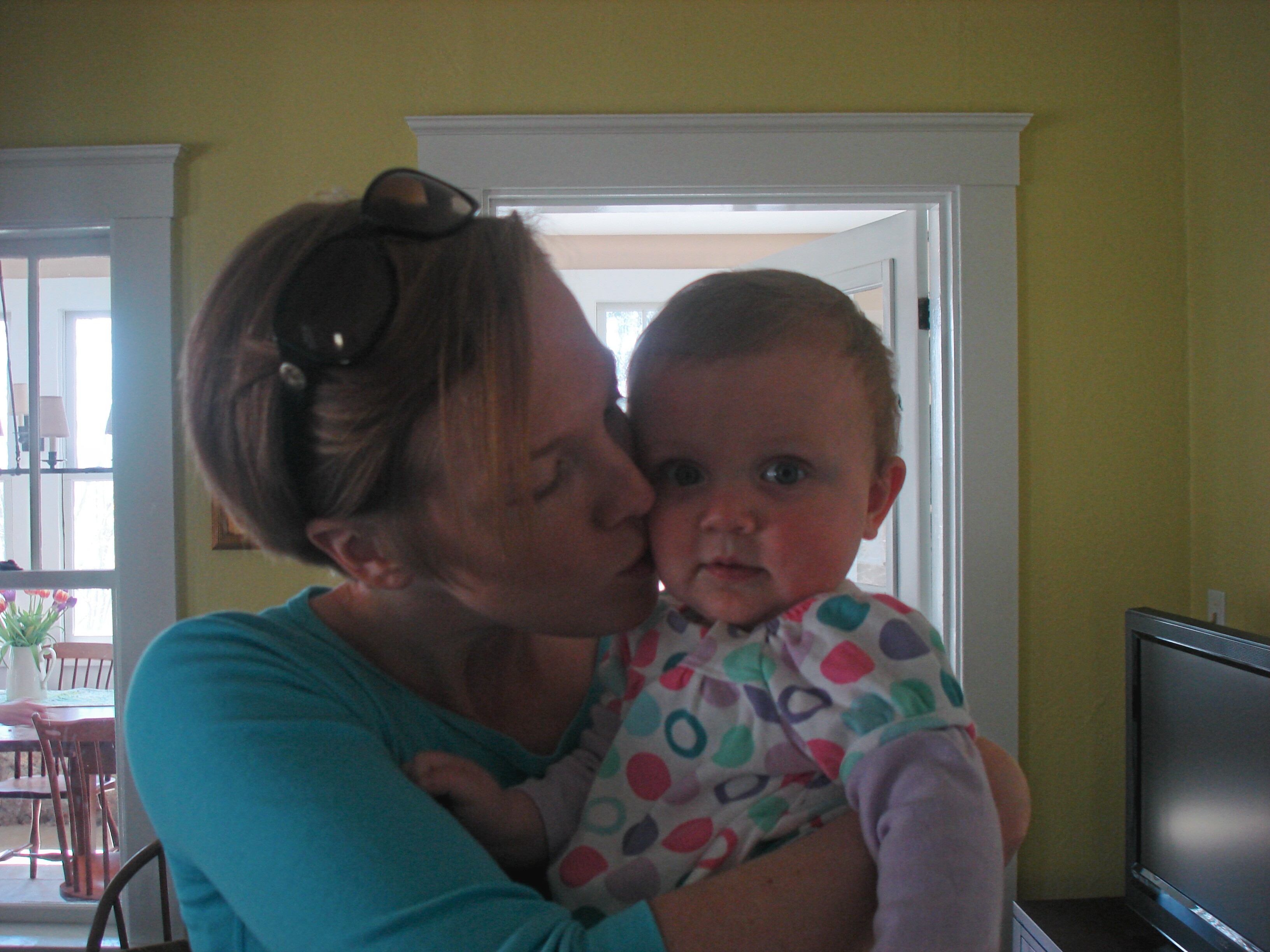
Nine months

Stella's a little shy in the pool--at first.

Stella's a little shy in the pool--at first.

So, Stella has been outside the womb for just about as long as she was in it. This seems like a big milestone to me and my uterus.

Stells (that’s not a typo–it’s one of our nicknames for her) celebrated her nine-month birthday on Sunday. The occasion was marked with a Waterbabies class (with a stop at Bellevue’s Downtown Park beforehand), and a walk to Gasworks Park. The next day, we went in to Dr. N’s office for her nine-month check-up. Ah, yes. Time for those dreaded percentiles.

Cody and I let out a sigh of relief and our shoulders dropped about six inches upon seeing the number on the scale: 19 pounds, 2 ounces. We knew that if she wound up at 19 pounds or so, she’d be at or above the 50th percentile for weight. I know, I know. It doesn’t even matter. One look at Stella tells you how happy and healthy she is. But we’ve got a nasty, lingering case of feeding aversion/tube-induced PTSD  and are grateful for any extra reassurance.

After the measurements were taken, the doctor came in, shook our hands and started tapping away on his touchscreen. He’d plugged in Stella’s stats in order to show us her growth curves, charted electronically.

“Look at this beautiful curve, ” he said, highlighting the fact that Stella’s weight was right between the 50th and 75th percentiles, just as it had been at her six-month check-up. He continued, with a bit of sing-songy positivity in his voice (which I loved), “And this curve looks great…” We saw that, for length/height, she was in the 75th percentile, just like last time. We were flying high.

Then, pointing to a dot, adrift above the highest percentile curve, he noted, “And this is how smart your baby is.” He was kidding, of course, but her head size was clearly “off the charts,” as they say. Last time, it’d been on the highest curve. Her head circumference has risen by a few percentiles between each check-up apparently. It’s not uncommon, really, and not a concern. Unless it keeps going, of course. In which case learning to walk will be a lot more challenging.

In short, Stella is thriving. Her doctor told us to feed her solids three times a day (I’d limited it to two, fearing that she might not take enough from the bottle otherwise), and to stop tracking how much formula she takes outside of that. He also suggested changing her formula to the normal 20-calorie-per-ounce concentration, which we have done. At one point, in the wake of all this, I stuttered, worriedly, with what I’m sure was a look of concern and confusion, “Um, so, like, h-how much f-formula does she NEED now?” The doctor kindly told us that we’d worried enough, and that we could stop now. Worry had become like air to us. So we are pretty much adapting to life on a new planet.

He also pointed out that, in a way, we are allowing Stella to wean herself off of the Ranitidine by not upping the dose as she grows. It reminded me of the progress she’s made int hese last three months. She’d been on two reflux medications until a couple months ago. We’ve lowered the amount of Simply Thick we put in her bottles, with the goal of soon weaning her off of that, too. She is back to the “normal” caloric density for formula–just like I’d predicted (boldy, it felt at the time) in her early tube-free days.

And that brings me to my point. So often, these days, when I look at Stella’s impossibly beautiful, beaming face, I can’t help but cry. Especially when she laughs. I remember, somewhere in the dark, dark days of December, bawling at most commercials. Our situation and those post-partum hormones were brutal–even bland Sleep Country USA ads opened deep, previously forgotten psychic wounds, apparently. But there was something especially gripping about the “Peace on Earth” spot for Pampers. Those soft, gorgeous baby faces! Those cherubic, chubby cheeks! Yes, those cheeks. Those cheeks, free from evidence of medical intervention. Those perfect baby lips, moving as if the baby is nursing in her dreams. They tormented me. Because to Stella, eating was a nightmare, not a dream, and our view of her angel face was obscured by two kinds of tape and a long yellow tube. Those babies were chubby and sleeping in a sprawled out fashion–not being force-fed while sleeping swaddled and strapped into a giant foam wedge. That commercial just seemed cruel to me at the time.

I go into her room and look at Stella every night before I go to sleep–despite that fact that by doing so I risk letting our super creaky floor wake her up. I have to do it. How could I miss out on the most beautiful sight imaginable? It is a triumph, a joy and a reminder to be grateful. I just watched the Pampers commercial again. And I have to say, Stella would fit right in with that bunch of sleeping angels–those arrogant bastards.

A drum roll seems inadequate

Today, we took a big step. It could save us a few hundred bucks a month while providing Stella with a better form of nourishment. OR IT COULD RUIN EVERYTHING.

You see, Stella’s formula is no longer covered by insurance. The really insane part of all this? Regence covered the formula when it was fed to her through a tube. But now that we’ve busted our asses to wean her off the tube, saving the insurance company costs encompassing her pump, tubes, tape and peripherals, they will not pay for her formula. It makes no sense whatsoever. NONE. We even had her doctor write an appeal, explaining why the formula was medically necessary. Doesn’t matter. Formula is completely excluded under the asinine rules of our insurance plan.

Stella’s elemental (hypoallergenic) formula costs about $40 for a 14-ounce can, roughly twice as much as typical formula (probably a little more). We can’t afford this right now. Especially since I was laid off. (I’d been expecting to go back to work part-time, but no dice. Did I mention I was available for freelance writing work?) That said, OF COURSE, we will continue to buy this formula and make whatever sacrifices necessary if we discover that her pricey fake milk is indeed crucial to her well-being.

A dietician recommended a formula based on hydrolyzed whey protein. This means that there is dairy in the formula. Even though it is partially broken down to “aid digestion,” this formula poses a risk. So, we’re starting slow. To make her 24-calorie-per-ounce formula, I usually make batches of 10 ounces of water mixed with six scoops of formula. So today, one of those six scoops was the new formula. I’ve read that it can take up to two days for the intolerance to rear its ugly head with symptoms like diarrhea, vomiting and general fussiness due to the pain. So I think I will stick with the low amount of new formula so that I don’t completely bombard her system with dairy.

It’s possible that she’s already outgrown the intolerance (though it usually happens closer to one year). Or that she never even had it to begin with. I’m not sure I ever explained that her “cow’s milk protein intolerance” diagnosis has never been proven scientifically. It’s just a theory based on her lab results and symptoms. Cody and I have read about another possibility: lactose overload. This could’ve happened when, after experiencing painful reflux, Stella nursed for very short periods (because taking in larger volumes exacerates reflux), giving her tons of lactose-heavy foremilk and little to no fatty hindmilk. All that lactose may’ve overwhelmed her system, which just couldn’t break it all down, causing damage to her intestines, weeks and weeks of diarrhea, terrible stomach pain, etc.

Another bit of motivation for this somewhat daring move is that her current formula consists mostly of corn syrup. Not the best quality nutrition. Might as well give her sugar water and a multivitamin. Then again, with all the corn syrup she’s eating, shouldn’t Stella be morbidly obese by now?

She was fussier than usual tonight, and her cheeks are rosier than usual, so I am already worried. Not sure we’ll have the guts to continue this trial much longer. In the meantime, I’ll be watching her facial expressions, cheeks, and general mood very carefully.

Meet Diego

Back in mid-November, when Stella’s NG tube was put into her cute nose and down into her then-hungry and confused tummy, I was understandably freaked out. I wondered if it was the right thing to do. I worried about how it would affect her. So I did the worst possible thing I could do. I turned to the internet for answers. What I found, mainly on message boards and on random, unofficial-looking “medical” websites, was horror story upon horror story about how NG tubes make feeding aversions worse. How they lead to complete oral aversions, make reflux worse and pave the way to surgically inserted g-tubes. I was so scared.

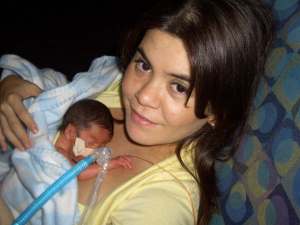
Rocio and Diego, bonding not long after his premature birth.

Rocio and her precious and miraculous Diego, bonding not long after his premature birth.

I did have the good sense to realize that the people most likely to turn to the web are those who, like myself at the time, are struggling. If things are going well with your child, or if you’ve overcome an issue and are no longer in it, you’re less motivated to go to the web and tell your story. You don’t need answers and support. You’re not desperate for any tidbit of information you can get. I knew that out in the real world, there were probably lots of babies who’d been on NG tubes for a short time and then resumed normal eating. Through my occupational therapist, I learned about the amazing Libby. And then, one night, through comments she left here on this blog, I met an incredible mother named Rocio and her son Diego.

That evening, Rocio did what I had done. She felt a rising sense of panic after reading terrible anecdotes about NG tubes online. She then came across Stella’s story and was encouraged to see that Stella was making progress with eating. Rocio and I began to communicate regularly via email. In a sense, it felt like we were in this together. This woman I had never met who understood everything I was going through and vice versa. We were going to get our babies off the tube. And no other outcome was acceptable. As scared as we were, we knew they could do it.

Rocio’s son Diego was born prematurely, at 28 5/7 weeks gestation. He was tube-fed from birth, first through his mouth, then, after graduating to “level 2” in the NICU, through his nose via a nasogastric (NG) tube, just like the one Stella had. As Rocio explained, Diego developed reflux while learning how to eat, which set him back. As in Stella’s case, the pain all but eliminated his desire to eat. After spending three months in the hospital, Rocio pushed to have Diego sent home, so that he could enjoy a more comfortable, cozy, non-medicalized environment. So, Rocio and her husband bravely learned how to maintain the NG tube, and headed home with their son, unsure about what the future held.

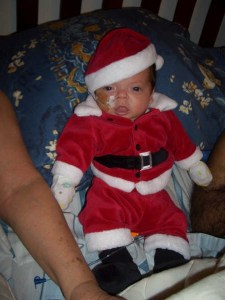
Like Stella, Diego had a Merry first Christmas--even with the NG tube.

Like Stella, Diego had a Merry first Christmas--even with the NG tube.

Rocio was on the same nauseating rollercoaster we had ridden. So many ups and downs. Exhilarating upswings of hope followed by crushing disappointments. Early on in our communications, at the very end of December, she told me, Diego was “not passing the 25 to 30 cc mark of drinking his bottle per feeding.” (There are about 30 cc’s or mls per ounce.) It was a tough time. But once in a while, he finished entire bottles–it took over an hour, but he was FINISHING them. And more progress quickly followed. One day, she told me that Diego took 90 mls in 45 minutes. He was showing that he could do it.

On February 4th, I received an unforgettable, elated email from Rocio. She told me that Diego had been without a tube for three weeks, and that he was thriving. In fact, he was gaining approximately one ounce  per day! Based on all the research I’ve done and my learning from the director of the Austrian tube weaning clinic, I know that this is amazing weight gain, especially so soon after the tube’s removal. Rocio was thrilled, and I truly felt her joy.

A GI doctor confirmed that Diego’s tube was gone for good. At this point, Stella had been without a tube for exactly one month, and it was also clear that her tube was gone for good. We’d done it.

Like Stella, Diego still had some difficulty swallowing. For us, thickening Stella’s formula did the trick. Last I heard from Rocio, Diego was going to have “ECI (Early Childhood Intervention) therapy because the swallowing study projected that he still needs to learn how to swallow better.”

I asked Rocio what she believed was the key to Diego’s success. Her answer was simple. First, Diego needed time to mature. Having been born so early, he didn’t have enough practice. (Babies learn to swallow in the womb.) Then, Rocio needed to get over her fear. Naturally, she worried that he would get sick or be undernourished upon the tube’s removal–even if a deeper part of her knew he no longer needed it. Lastly, she pointed to the removal of the tube as the most important aspect of his feeding progress. Rocio explained, “Pray and have faith. Babies will eat without [the tube] once they feel the need and understand that if they do not want to eat the regular way, they will have no other way to do so.”

With his tube days behind him, Diego is radiant and thriving!

With his tube days behind him, Diego is radiant and thriving!

Rocio fought for Diego. She faced incredibly challenging circumstances with Diego’s premature birth and extended hospital stay. She had to push just to take him home. Then she found the support and therapy he needed. Then she made the big decision to follow her instincts and take out the tube. This is a beautiful, healthy boy who has overcome some daunting odds. And he’s very lucky to have Rocio as his mother.

Whenever I think about Stella’s challenges with eating, that very trying time in our lives and how we overcame it all, I’ll think of Rocio and Diego, too.

My other resume

I’ve jumped back into the freelance writing life in an effort to make a bit of money while I stay home with Stella Bella. This, of course, necessitated the updating of my resume.

It got me thinking. Some of my most impressive achievements and abilities will never grace the pages of this supposedly all-important document. And it seems like a shame. I am referring, of course, to motherhood–all that it requires. And with that, I present my other resume…

EXPERIENCE

Mother, 8/17/08–present (lifetime commitment)

  • Collaborate with Stella Eleanor’s father (my husband) to ensure that she grows and thrives; oversee everything from basic maintenance, such as diaper changes and feeding, to high-level development including babbling, drooling, sitting up, laughing, and rolling/tummy time, with plans to teach her how to be kind, walk, use the toilet and drive
  • Provide attention, protection, guidance and full range of entertainment services including peek-a-boo, tickling, general zaniness and impromptu songs, stories and farting noises
  • Willingly put my daughter’s needs before my own while still taking care of self and providing excellent example of how to live life to the fullest
  • Manage public relations; handle photography and mailing of seasonal cards and wellness updates; manage upkeep of Flickr account with near-daily shots of Stella to prevent extended family from suffering cuteness withdrawal
  • Love that girl with all my heart, 24 hours a day, seven days a week, 52 weeks a year–even when her yelling reaches peak annoy-ability levels

Giver of Life, 8/15/08–8/17/08

  • Gave birth to baby girl weighing 7 pounds and 7 ounces; filled with pure joy upon her arrival
  • Kicked ass throughout 32-hour un-medicated labor during which baby’s head was transverse (sideways)
  • Nearly broke husband’s hands with vice-like grip; will try harder next time

Grower of Human Being, 11/08–8/09

  • Provided egg for successful fertilization; worried endlessly about fetus from moment of conception
  • Attended prenatal yoga, birthing and parenting classes despite overwhelming exhaustion and overwhelmed bladder
  • Ate enough cheese to feed all of Wisconsin for three years; consumed record amounts of grapefruit juice
  • Tolerated the shooting of sharp pains up my rear-end for several months; withstood debilitating hip pain and baby’s roundhouse kicks
  • Enjoyed pregnancy despite all of the above

Warrior, 10/08–02/09

  • Assembled and coordinated a top-tier team of Seattle doctors, as well as two lactation consultants, an occupational therapist, nutritionist, dietitian and cranial osteopath
  • Managed to maintain sanity when baby refused to eat; chugged olive oil and ate bacon in a valiant attempt to fatten starving, anxiety-ridden self and improve quality and caloric value of breast milk
  • Mastered use of Supplemental Nursing System while successfully limiting use of the “f-word” to 400 times per day; managed insertion and maintenance of god-forsaken nasogastric feeding tube and associated god-damned pump and evil face tape and crap-tastic peripherals; sacrificed small but previously perky boobs to hospital grade breast pump
  • Navigated labyrinth of hospital and health care challenges; slashed red tape and improved child’s outcome by 1000%; successfully argued case for the removal of nasogastric tube and executed successful tube weaning; produced a happier child and family as a result of round-the-clock efforts
  • Analyzed growth charts, lab results and intake levels; conducted in-depth, terrifying online research on daughter’s condition and treatment

EDUCATION

The Parental Institution of Barbara and Gregory Hescock

  • Coursework in everything, with an emphasis on love, the value hard work, and a good sense of humor

School of Hard Knocks

  • Classes included Terrible Mistakes, Bad Relationships 101, and The Awkwardness of Middle School

Sink or Swim Academy

  • Curriculum revolved around parenting without anything resembling adequate preparation

SKILLS SUMMARY

General: Expert-level nurturing, crisis and conflict management, hazardous waste handling and sanitation, budgeting, soothing, teaching life skills and morals, child safety, nursery decorating, baby-wearing, silly face and nonsensical sounds mastery

Technical: Milk production, human creation, swaddling, rocking, one-handed diapering (experience with both formula and breast milk poop platforms), bottle maintenance, reflux abatement

COMMUNITY SERVICE

  • Contributed a new member to the human race
  • Responsible raising of a kind, compassionate, contributing citizen
  • Adept removal of screeching baby from public places, ensuring a peaceful community
  • Addition to the world of a love that grows by leaps and bounds each and every day

Tube-free Stella: Day 3

Stella is aptly named.

Today we received an effusive outpouring of support. From a stranger with whom we’d never spoken but who’d seen Stella with the tube and couldn’t stop gushing about how happy she was to see her without it. From two shop clerks whose eyes brightened at the sight of her tube-free face. And from our beloved Dr. Devorah, who helped Stella get to where she is and who today showered me with hugs and Stella with kisses. Robin Glass, Stella’s occupational therapist and an absolutely huge source of support and wisdom, emailed to check in, even though she doesn’t work on Thursdays. Joy is everywhere.

I know we’re not in the clear yet, but Stella is doing well.  She is happier than ever. We can’t help but feel celebratory. Already. There is still work to do, but it simply feels right. The worry and fear that held me in its grip is retreating, scurrying back to the dark quarters of the universe.

Tomorrow, we have an appointment with Stella’s pediatrician. When we last spoke over the phone, on the day Stella took out her tube, he said two or three tube-free weeks would be fine, and we’ll only be on day four when we see him. Still, I’m a little nervous and hope that his assessment of Stella is in line with ours.

That tube is not going back in. Not if I have anything to do with it!

Tube-free Stella: Day 2

Can’t sleep so I thought I’d write a quick update. Weaning seems to be going well. Stella is happy and eating pretty often. As is expected over the course of her complete transition from the tube to the bottle, her volume will increase over time. I am struggling to let go of my obsession with counting every milliliter she takes, despite strong encouragement from several camps to do so. While I’m still working on that, I am successfully ignoring the clock, so that’s a good step. My job is to watch for Stella’s hunger cues and feed her when she wants to eat. And I’m embracing this role! She is in charge of her intake, as she should be.

I consider it a great sign that on several occasions, she’ll whine due to hunger. Then I’ll show her the bottle, and she’ll stop whining and even smile. If I put the bottle out of sight, the whining begins again. The girl totally gets that food is good stuff. She is coming around.

Today, I learned the secret to rolling success for Stella: let her be naked for a while after a diaper change. As soon as the clothes come off, the rolling begins. It’s amazing! She has completely mastered back-to-belly rolling but is still working on belly-to-back rolling. She is close–just figuring out what to do with her arms (as am I half the time). Adding a touch of suspense is the ever-present possibility that she could poop or pee all over the place at any moment. Cody and I find this all incredibly entertaining. Who needs TV when you’ve got Stella?

I talked to Stella’s occupational therapist on the phone today and it was very affirming! Based on my account of Stella’s first day and a half without the tube, she confirmed my feeling that things were going well and addressed the minor worries and questions that lingered in my mind. Tomorrow, we’ll see Dr. Devorah for another session of Cranial Osteopathy. On Friday, we’ll visit her pediatrician. Other than that, we’re taking our walks, rolling around, reading books, listening to music, playing and enjoying our days free from the hassles, worries and snag-potential of the tube!

Speaking of our walks, I had the growing suspicion that Stella was becoming “The Tube Baby of Wallingford,” an adorable but medicalized mascot for this Seattle neighborhood. We enjoy a stroll or two every day, with Stella facing out in the Baby Bjorn and taking in the world around her, and along the way we see a lot of the same neighbors, clerks, walkers, joggers and baristas. Many seem taken with Stella and I had the feeling that she received some extra looks from some curious people because of the tube. It felt so good to visit our usual shops and see that people share in our excitement about the tube being gone.

We remain very optimistic. Focused on the mission at hand, but having fun, too. 

Thanks for following her progress. It means a lot to us. Stay tuned.

Tube-free Stella: Day 1

Taken just after the tube came out.

Taken just after the tube came out.

Stella is off and running. I am so proud of her. In short, she is responding well and our confidence is growing. She can do this.

It is expected that she will lose a little bit of weight. I am on strict instructions to NOT WORRY about how much she eats or when. To NOT PANIC if she goes a few hours without eating. That is the challenge. I am simply to trust her to know when she’s hungry and how much she needs. To know that she will tell me in her own way that she is okay–or if she’s not. This simple trust is a bit harder than it sounds, due to our scary experiences of a couple months ago.  But we are beyond all that now. I am ready and so is Stella. Her intake will increase as she adjusts.

The only remaining concern is her reflux and how much of an impact it has on her desire to eat. It definitely still bothers her sometimes. But I think she is comfortable enough to pull through it. I don’t think it will stop her.

This morning, we ventured over to Seattle Children’s Hospital for Stella’s occupational therapy appointment with Robin, who was incredibly helpful and reassuring as always. She is pretty central to this process and to Stella’s progress thus far. I am to call her tomorrow to check in. I feel very supported in this proces–by Robin, Stella’s pediatrician, and the Austrian doctor as well, who has been keeping in close email contact. It’s funny–the Austrian clinic’s approach to weaning is almost identical to what I’m hearing from Robin. It’s all coming together.

This is huge. The tube weaning process is no cake walk, but we are feeling good. Stella seems happy–even more so than usual.

As so many of you have already said, “Go, Stella, go!”

The tube is out. I repeat: The tube is OUT.

And we are leaving it out.

This weekend, I sent Stella’s pediatrician and occupational therapist an email outlining my concerns about the tube and research to back up those concerns. Today, they agreed to a tube-free “trial.” Her doctor said two to three weeks without the tube would be “low risk” given how healthy she is.

We will meet with her occupational therapist tomorrow, and see her pediatrician on Friday. I have been in contact with the Austrian feeding clinic, wired them the registration fee, and they will offer weaning guidance via email as well.

I’d intended on leaving the tube in tonight, and taking it out in the morning. But she yanked it most of the way out tonight, so we went with it. And let me tell you… her tube-free face was a sight for sore, exhausted eyes.

The plan is really quite simple. Feed Stella when she is hungry. When she TELLS me she’s hungry (with her whining). Give her no more than she wants to take. Don’t panic if she doesn’t take much. Wait for her to tell me she’s hungry again, whenever that is, and repeat.

Stella, the feeding reigns are in your precious little hands. Show ’em what you got.